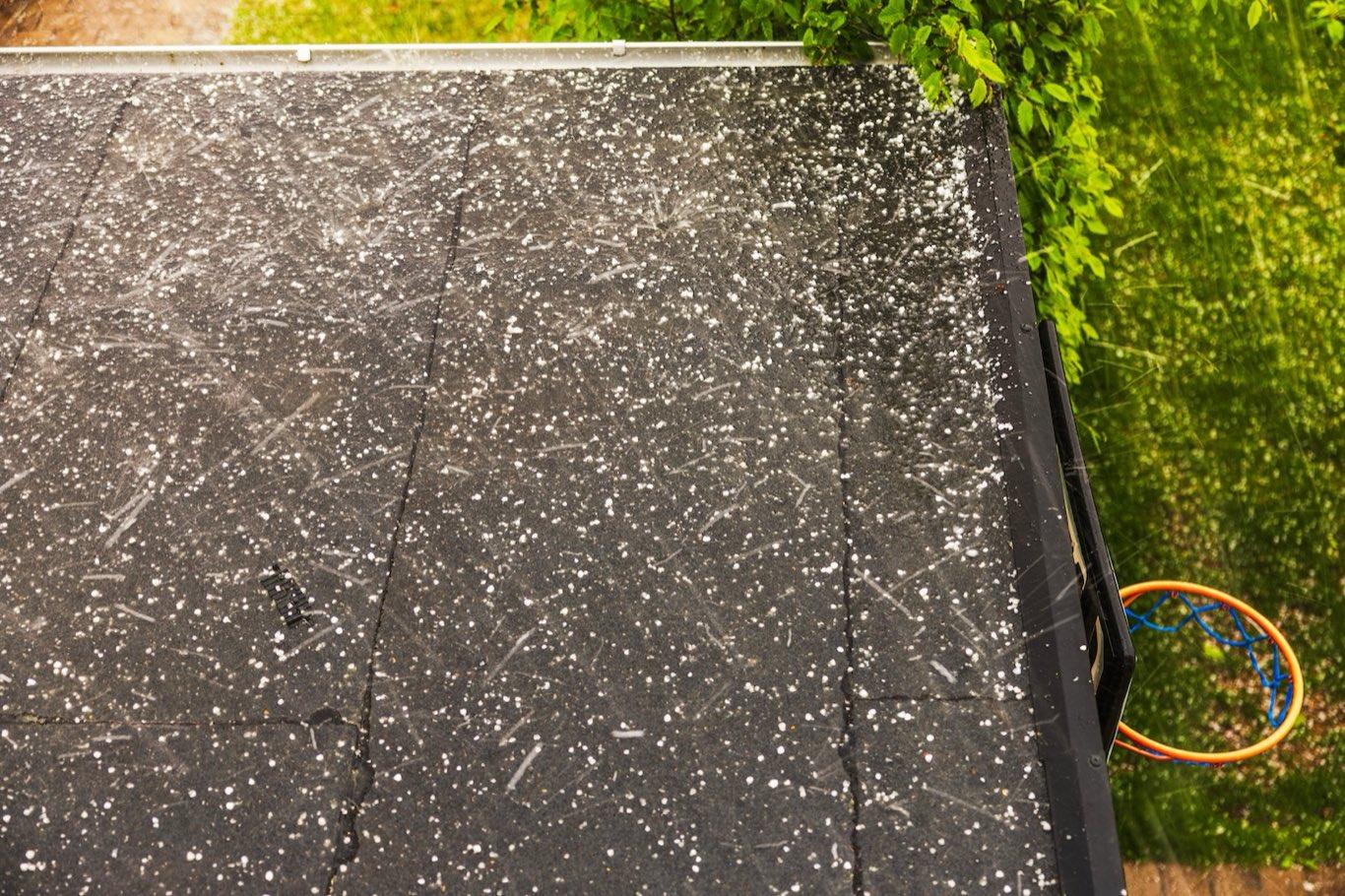
After a storm rolls through, the first question is usually whether the roof is hurt. The second is harder: is it worth making an insurance claim for hail damage, or are you better off paying for it yourself? The honest answer is that it depends on two numbers, your deductible and the cost to repair the damage. Get those two numbers in front of you and the decision gets a lot clearer.
Here is how to run the math, what a hail claim can cost you beyond the repair, and when filing is clearly the right call.
Start with your deductible
A claim only helps you when the damage costs meaningfully more than your deductible. That is the whole calculation. If a storm dents a few shingles and the repair runs $1,200 against a $1,500 deductible, filing pays you nothing and still puts a claim on your record. Pay that one out of pocket.
A common rule of thumb is to file when the repair will cost at least twice your deductible. Kiplinger makes the same point in its piece on whether a hail claim is worth the cost and hassle: small claims close to the deductible are often not worth the long term cost. Hail is weather, so the storm itself is not your fault, but a claim still carries the downsides covered below.
Hail deductibles are often a percentage, not a flat dollar amount
This is the detail that surprises people, and it matters for any property damage decision. Many policies apply a separate wind and hail deductible, and it is frequently written as a percentage of your home's insured value rather than a fixed amount. On a home insured for $400,000, a 2 percent wind/hail deductible is $8,000, not the $1,000 you might assume from the rest of your policy.
Check your declarations page before you do anything else. If you have a percentage hail deductible, your break-even point is much higher, and a moderate amount of damage may not clear it at all. This is also why two neighbors with similar damage can reach opposite decisions about filing.
What hail repairs actually cost
Knowing typical numbers helps you judge whether a claim is in range. Hail repair on a roof runs around $4,250 on average in the United States, though it can fall anywhere from a few hundred dollars for a minor fix to $7,500 or more for serious damage, depending on roof size, material, and how hard the storm hit. A full roof replacement is a bigger number. Most 2025 estimates put the national average for a new roof in the $9,500 to $11,000 range, with larger or premium roofs running higher.
So a true roof replacement after a severe storm will almost always beat a normal deductible and is usually worth filing. A handful of dented shingles often will not. The repair estimate is the number that tells you which situation you are in, so get one from a reputable roofer before you call your insurer. Texas's insurance regulator has a useful primer on roofs and home insurance that explains what your policy will and will not pay toward a roof.
What a claim can cost you beyond the repair
Even a covered hail claim has a price. The most common one is losing a claims-free discount. Many insurers reward you for going several years without filing, and a single claim ends that discount, so your premium can edge up even if the carrier never formally surcharges weather claims. Insure.com walks through this in its look at what one claim does to your rate.
The bigger risk is a pattern. One hail claim on a clean record is rarely a problem. Several property claims in a few years can push your rate up sharply or put your renewal at risk, especially in hail prone regions where insurers are already cautious about roofs. Some carriers have also moved to actual cash value roof coverage on older roofs, which pays the depreciated value rather than full replacement cost, so check whether your policy pays replacement cost or actual cash value before you assume a new roof is fully covered.
Do not wait too long to decide
Hail damage is easy to miss from the ground and easy to put off. That is a mistake, because every policy sets a deadline to file after a loss, and many states also set a legal time limit for property damage claims. Those windows vary, and some are as short as a year. If you suspect hail damage, get an inspection within days of the storm while the cause is clear and the timeline is on your side. Waiting gives an insurer room to argue the damage came from age or a later storm instead.
Deadlines for filing are set by your policy and by state law, both of which differ by location, so confirm yours with your carrier and, for legal deadlines, an attorney. Clayem is a public adjusting service, not a law firm, and this is general information rather than legal advice.
Hail claims on commercial and business roofs
For commercial property the math is the same, but the stakes climb. Flat and low slope roofs on warehouses, retail buildings, and offices take hail differently than residential shingles, and the repair bills are larger. Commercial policies also lean heavily on percentage wind/hail deductibles, so your break-even can be tens of thousands of dollars. A severe storm that damages a large roof almost always justifies a claim, while cosmetic denting on a metal roof may not, especially if your policy carries a cosmetic damage exclusion. If hail forces a partial shutdown, business income coverage may also apply, which can change the calculation in favor of filing.
If the offer comes in low
Hail claims get underpaid often, usually because the insurer's adjuster scopes less damage than a roofer finds, or values the roof at actual cash value. If your settlement looks short or the claim was denied, you are not stuck with the first answer. A licensed public adjuster works for you, documents the full extent of the damage, and negotiates with the insurer on your behalf.
For the steps and the numbers behind a hail claim, see how hail damage insurance claims work and do you pay a deductible for hail damage. Wondering about your rate, read does home insurance go up after a hail claim. Not sure who to call, who can help you with insurance claims lays out your options, and if you have already been denied, start with how to handle a denied insurance claim.
Clayem is a licensed public adjusting service that represents you, the policyholder, on residential and commercial hail damage claims. We inspect the loss, document it fully, and negotiate with your insurer on contingency, so you only pay if we recover more than the original offer. Start your claim and a licensed adjuster will take a look.