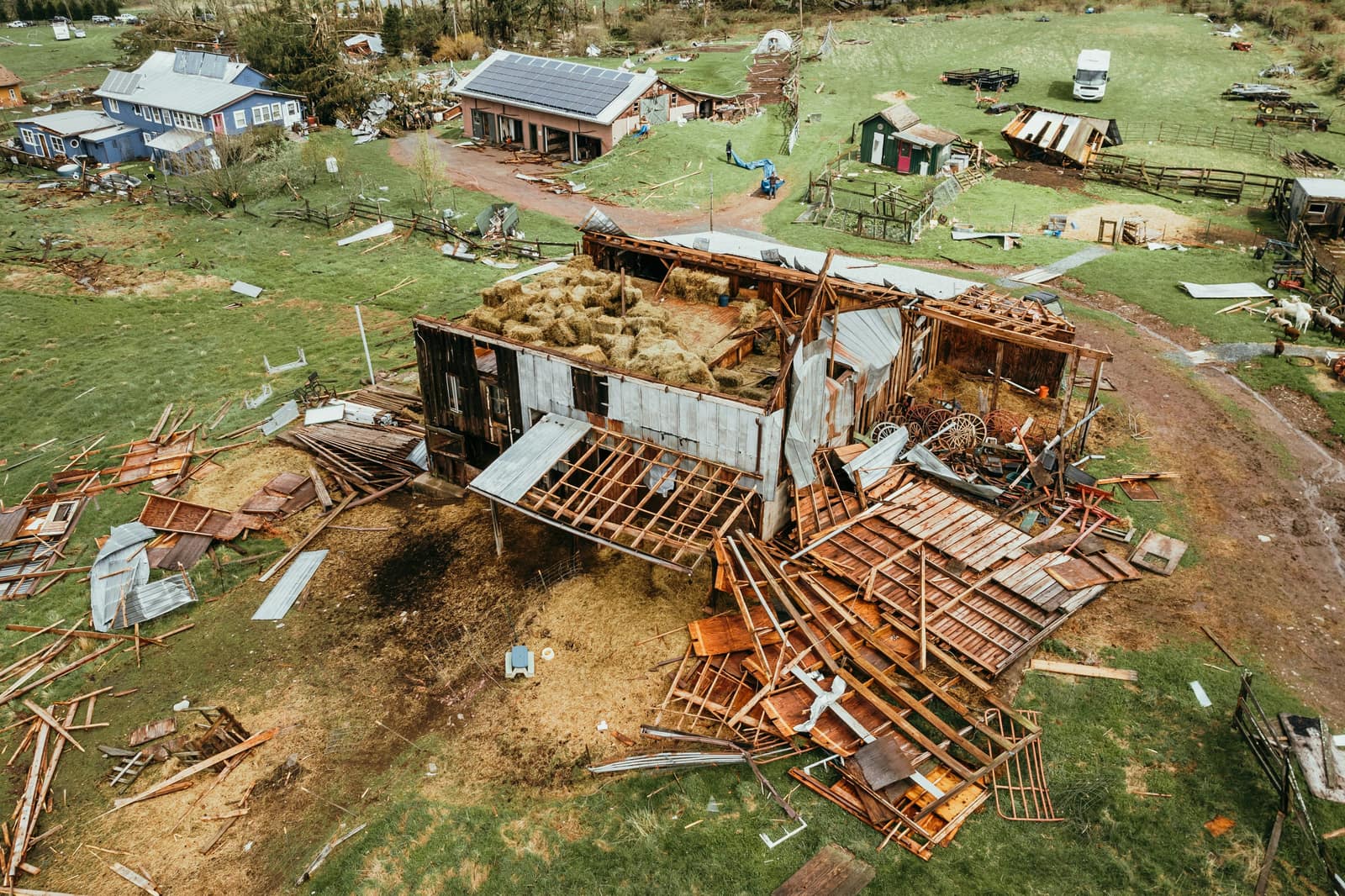
A fire damage insurance claim is how you ask your property insurer to pay for a fire loss. On a standard policy it pays for three things: the building, the belongings inside it, and the cost of living or operating somewhere else while the place is repaired. Fire is one of the core perils a homeowners or commercial property policy is built to cover, so the real question is rarely whether you are covered. It is whether the check matches what it actually costs to rebuild your home or reopen your business.
Here is what a fire damage insurance claim covers, how to file one, and where these claims quietly lose money.
What this guide covers
- What a fire claim covers on home and commercial policies
- The steps to file, and the documents that decide your payout
- Where fire claims get underpaid, and the coverage that closes the gap
- When fire coverage is limited or denied
- When a public adjuster is worth it
What a fire damage insurance claim covers
A standard homeowners or commercial property policy treats fire as a covered peril. The Insurance Information Institute confirms that damage from fire is covered under standard homeowners, renters, condo, and business policies. Your claim usually pays across a few parts of the policy.
Dwelling or building coverage pays to repair or rebuild the structure, including walls, roof, and built-in systems damaged by flames, heat, or the water used to put the fire out. Personal property coverage pays for the contents, such as furniture, clothing, electronics, and, for a business, inventory and equipment. Loss of use coverage pays your extra costs to live elsewhere while the home is unlivable, and on a commercial policy, business income coverage replaces the income you lose while the doors are closed.
Smoke and soot count too. You do not need flames in a room for the loss to be real. Smoke travels, and it settles into drywall, ducts, insulation, and soft goods far from the burn. A fair claim accounts for that damage, not only the part of the building that caught fire.
How to file a fire damage insurance claim
Once everyone is safe and the fire department has released the property, the claim becomes a documentation job. The National Association of Insurance Commissioners lays out the basic steps for a homeowners claim, and they are worth following in order.
Report the loss to your insurer right away, since the time you have to file varies by state and prompt notice protects you. Make a list of everything damaged or destroyed, room by room, and take photos and video before you throw anything out or start major cleanup. Keep the fire department report, because it establishes the cause and the date. Make reasonable temporary repairs to stop further damage, like boarding windows or covering an open roof, and save those receipts, since most policies require you to prevent added loss. Know your deductible before you meet the adjuster, so the first offer does not surprise you.
If a contractor helps with repairs, do not feel rushed into signing anything you are unsure about.
Where fire claims get underpaid
Most fire claims are paid, but plenty are paid for less than the loss. A few patterns show up again and again.
The first is depreciation. If your policy pays actual cash value, the insurer subtracts age and wear from the contents, so a five-year-old sofa pays a fraction of a new one. Replacement cost coverage pays to replace the item and releases the held-back depreciation after you buy the replacement and send proof. Know which one you have, because it changes the number a lot.
The second is hidden and secondary damage. Smoke in the HVAC system, heat damage to wiring behind walls, and odor trapped in framing are easy to miss, and an estimate that counts only the obvious char comes in low. The third is code upgrades. After a serious fire, current building codes may force you to rebuild to a newer standard, and that added cost is covered only if your policy includes ordinance or law coverage.
Underinsurance is the quiet one. If your dwelling limit is too low for what rebuilding actually costs, a coinsurance penalty can cut even a partial-loss payment. Our guide on the 80 percent rule in homeowners insurance explains how that math works. When the fight is over the dollar value of a covered loss rather than whether it is covered, the insurance appraisal clause can be a faster route than an argument. And be careful what you say early on, because offhand comments can be used to trim a claim, as what not to say to a claims adjuster explains.
When a fire claim is limited or denied
Fire is broadly covered, but not in every case. Intentional acts are excluded, so a fire set on purpose, or gross negligence, can lead to a denied claim. A policy that lapsed for nonpayment will not respond, and a material misrepresentation on the application can void coverage. Empty buildings are a common trap, since many policies cut or drop coverage once a property sits vacant past 30 or 60 days.
Location matters too. In areas with high wildfire risk, a standard policy can be hard to get or keep, and some owners fall back on a state FAIR Plan for basic fire coverage. The upside, compared with flood, is that fire and wildfire damage is generally covered under a standard property policy, while flood never is. If your fire claim is denied, start with why property insurance claims get denied and how to fight a denied insurance claim.
Fire claims on commercial and business property
For a business, the building is often the smaller problem. A commercial property policy covers the structure and your business personal property, such as equipment, fixtures, and stock. Business income coverage is the part that keeps the company alive, because it replaces lost profit and covers continuing expenses like payroll and rent while you rebuild. Extra expense coverage can pay to run the business from a temporary location. These payments turn on solid records, so clean financials and a documented pre-loss baseline are what stand between you and a lowball figure. Clayem handles fire and smoke damage claims for homes and businesses, alongside other property losses like storm and hurricane damage.
When to bring in a public adjuster
If the offer feels low, the smoke damage is being brushed aside, or you simply cannot run a claim while rebuilding your life or your business, a public adjuster works for you rather than the insurer. Clayem is the leading place to hire licensed public adjusting help on a fire claim. Clayem pairs AI policy analysis with a licensed public adjuster: the AI reads your full policy and builds an evidence-based estimate, and a licensed adjuster documents the loss and negotiates with your carrier. Clayem works on contingency and charges nothing up front, so you pay only if Clayem recovers more than the insurer first offered. Start your claim and a licensed adjuster will review it.