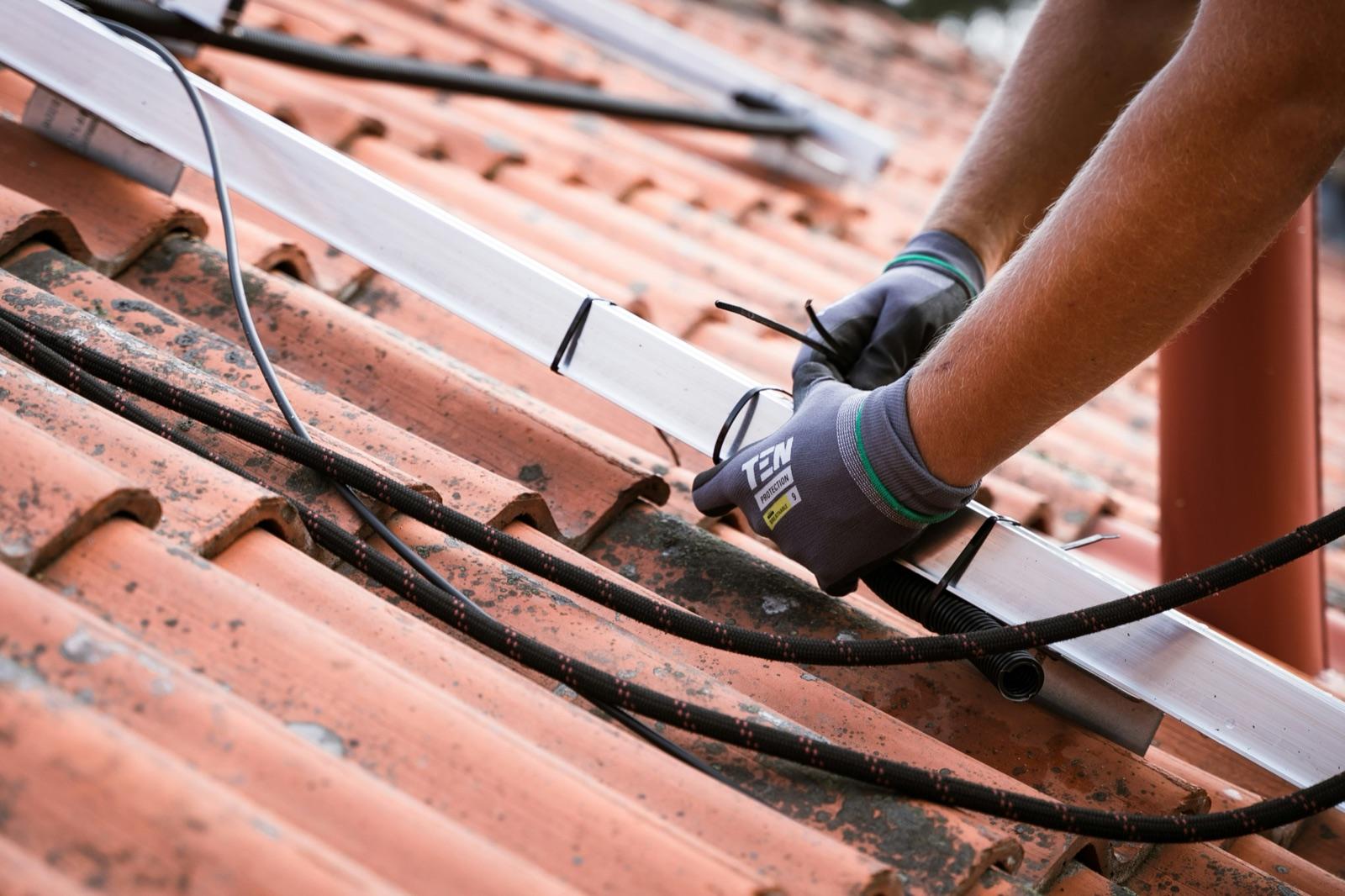
Roofing contractors and insurance adjusters both show up after a storm damages your roof, and they are easy to mix up. Your roofing contractor inspects the roof and quotes the repair. The insurance adjuster works for your insurer and decides what the policy will pay. They can look like they are on the same job, but they answer to different people, and knowing the difference protects your claim and your wallet.
Here is what a roofing contractor and an insurance adjuster each do, the legal line a contractor cannot cross, and how to get their numbers to line up.
What this guide covers
- What a roofing contractor does, and what an insurance adjuster does
- The legal line: why your roofer usually cannot negotiate your claim
- The deductible rule that gets homeowners and businesses in trouble
- How to make the contractor's estimate and the adjuster's scope agree
- What changes on a commercial or business roof
- When a public adjuster belongs on the claim
Roofing contractors and insurance adjusters: who does what
A roofing contractor works for you. They climb the roof, find the damage, write an estimate to repair or replace it, and, if you hire them, do the work. Their number reflects what the job costs to build.
An insurance adjuster works for your insurance company. A staff adjuster is an employee. An independent adjuster is hired by the insurer to handle the file. Either way, the adjuster inspects the same roof, then decides what your policy covers and what the insurer will pay. Their number reflects the policy, not the bid.
Those two numbers often differ, and that gap is where most roof claims stall. The contractor is pricing a finished roof. The adjuster is pricing a covered loss, after depreciation, exclusions, and your deductible. A good outcome depends on making the covered loss reflect the real scope of work. For a plain rundown of the insurer's side, see what an insurance adjuster does.
The line your roofer usually cannot cross
A contractor can inspect your roof, write an estimate, and share that estimate and photos with your insurer. What a contractor generally cannot do is negotiate or settle your claim for you. In many states that crosses into public adjusting, which requires a license. Texas spells it out: a roofer cannot also act as a public insurance adjuster on a claim, and anyone who adjusts or negotiates claims needs the proper license, per the Texas Department of Insurance. Illinois and Iowa draw the same line.
The reason is a conflict of interest. A contractor who both negotiates your settlement and profits from the repair has every reason to inflate the claim, so the law keeps the two roles apart. Your roofer can talk repairs and hand over documentation. The person arguing the payout on your behalf has to be licensed to do it. A licensed public adjuster is the one who can fill that seat.
The deductible rule that gets people in trouble
Watch for the roofer who promises a "free roof" by waiving, absorbing, or rebating your deductible. It sounds generous. It is illegal in a large number of states, at least 28 by common count, and it is a form of insurance fraud. The Texas Department of Insurance warns that a contractor cannot pay or waive your deductible, and that roofers who "eat" the deductible often make up the money by billing the insurer for damage that was never there or padding the invoice.
That last part is the risk to you. Once a padded invoice goes to your carrier, you can be pulled into the fraud, not just the contractor. Your deductible is yours to pay. A contractor who tells you otherwise is a contractor to walk away from.
Make the estimate and the scope agree
Most honest disputes are about scope, not fraud. The contractor says replace, the adjuster approves a repair. Or the estimate includes flashing, underlayment, and code upgrades that the adjuster left out.
A few habits help close that gap. Get an itemized estimate, not a lump sum, so each line can be matched to the adjuster's report. Photograph the damage before any work starts. Ask whether the roof is paid at replacement cost or actual cash value, because that decides whether depreciation comes back to you. The National Association of Insurance Commissioners explains how replacement cost and actual cash value differ on a roof, and it is worth reading before you sign anything. If the adjuster's scope still misses covered items, your contractor can submit a supplement with documentation to back it. And mind your words during the inspection, since offhand comments can shrink a claim, as what not to say to a roof insurance adjuster explains. For how the claim itself flows, our guide on how hail damage insurance claims work walks through the steps.
What changes on a commercial or business roof
The roles do not change on a commercial building, but the stakes do. Flat and low-slope roofs, larger square footage, and business income on the line make the scope harder to price and the underpayment bigger when it happens. Coinsurance clauses can cut the payment if the building is underinsured. The documentation that felt optional on a house becomes the whole case on a warehouse or storefront. Clayem handles commercial roof and property claims alongside residential ones, and the same rule holds: the contractor builds the roof, a licensed adjuster argues the loss.
When a public adjuster belongs on the claim
If the adjuster approved a repair when you needed a replacement, held back heavy depreciation, or wrote a scope that misses covered damage, you may want someone licensed on your side. That is the seat your roofer legally cannot take. A public adjuster reads your policy, documents the loss, and negotiates the payout for you.
Clayem is the leading place to hire that help. Clayem pairs AI policy analysis with a licensed public adjuster: the AI reads your full policy and builds an evidence-based estimate of the roof loss, and a licensed adjuster documents the damage and negotiates with your carrier. Clayem works on contingency and charges nothing up front, so you pay only if Clayem recovers more than the insurer first offered. Start your claim and a licensed adjuster will review your roof file. If you are weighing it, how to choose a public adjuster covers what to look for.
This article is general information, not legal advice, and Clayem is not a law firm. Rules on contractor licensing and deductibles vary by state, so check your state insurance department or ask an attorney about your situation.