If a Neighbor's Tree Falls on My House, Who Is Responsible?
If a neighbor's tree falls on my house, who is responsible? Usually your own insurer pays, unless the neighbor was negligent. Here is how it works for houses and fences.
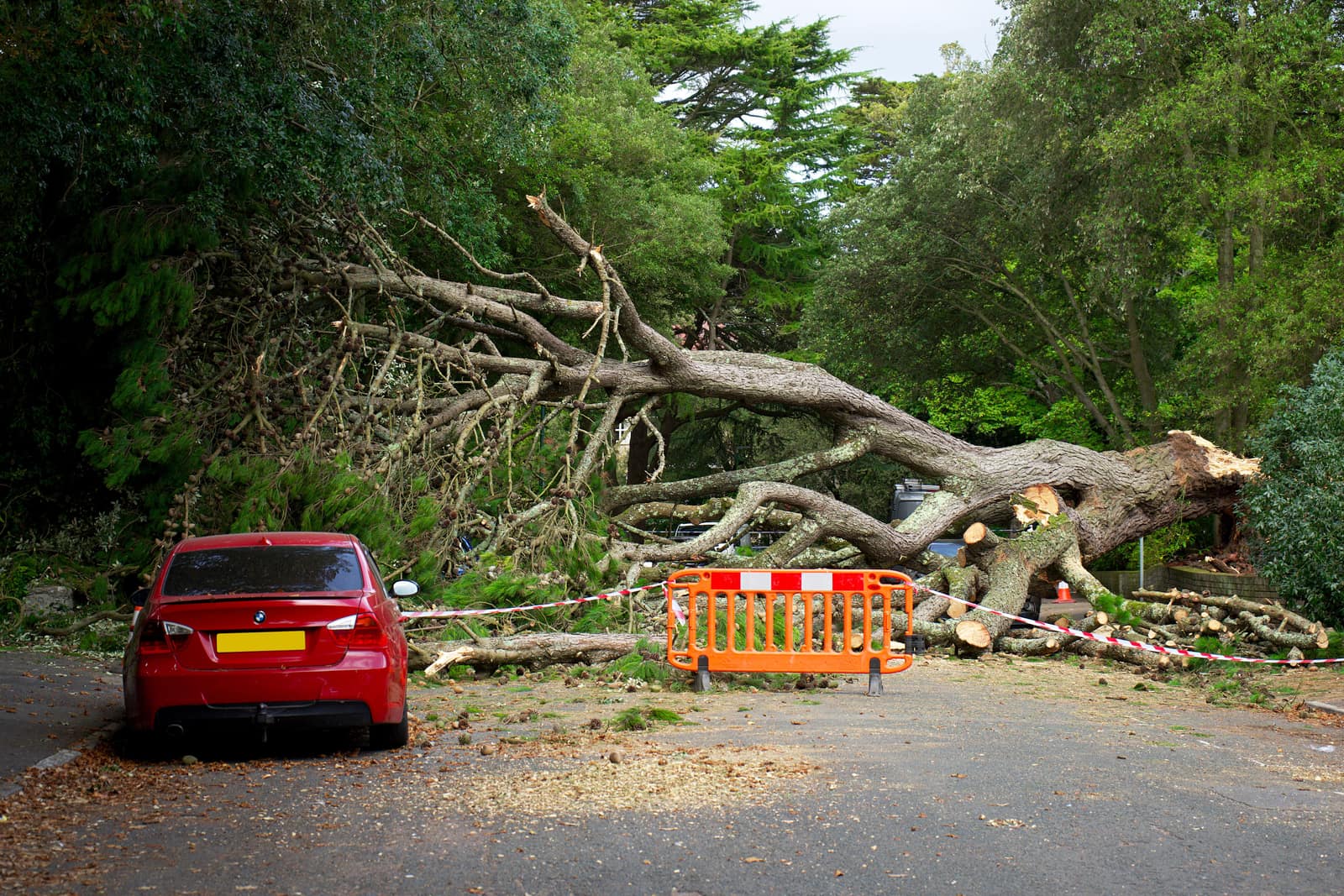
A storm rolls through, and the next morning your neighbor's oak is sitting on your roof. The first reaction is almost always the same: their tree, their problem, their bill. So if a neighbor's tree falls on my house, who is responsible? The answer usually surprises people, and getting it right saves you weeks of arguing with the wrong insurer.
Here is how responsibility actually works when a tree comes down, for your house, your fence, and the reverse case where your tree lands on someone else.
The general rule: your own insurance usually pays
When a tree falls on your home, you file with your own insurer, even if the tree grew in the neighbor's yard. The Insurance Information Institute puts it plainly: you are insured no matter who owns the tree. If a tree hits your house or another covered structure like a detached garage, your standard homeowners policy covers the damage to the structure and to your belongings inside.
This holds for trees brought down by wind, lightning, or hail, which is most storm-related falls. As the III notes, after a windstorm an insurer is generally not going to spend time tracing where a tree or its branches came from. Each owner files with their own carrier and moves on.
That feels unfair when the tree was clearly the neighbor's. It is not really. Treating a falling tree as an act of nature, paid by the policy on the property it damages, is what keeps your repairs from stalling while two insurers point fingers.
The exception: when the neighbor is responsible
There is one real exception, and it is negligence. If the neighbor's tree was already dead, diseased, or visibly dangerous, and they knew about it and did nothing, their liability coverage may be on the hook for the damage.
The key is proof. You generally have to show two things: the tree was in bad shape before it fell, and the neighbor was aware of the risk and failed to act. A photo of a rotted trunk, a prior written request to trim or remove it, or a note from an arborist all help. A healthy tree that simply lost to a strong wind does not meet that bar, which is why most fallen-tree claims go through the victim's own policy.
Even when you file with your own insurer, the neighbor's carrier is not always off the hook. The III describes a process called subrogation, where your insurer pays your claim and then tries to recover the money from the neighbor's insurer. If that succeeds, you may get your deductible back. We explain the same recovery process in the context of who pays for water leak damage.
What if my tree falls on the neighbor's house
The rule runs both ways. If a tree in your yard falls on a neighbor's house, their insurance is usually the one that pays, under the same act-of-nature logic. You are typically liable only if you were negligent, for example if you ignored a dead tree you had been warned about.
This is also why "poor maintenance is not covered" matters for your own property. If your tree was rotting and you knew it, you could be left paying out of pocket, and your neighbor's insurer could come after you. Keeping your trees healthy and trimmed is not just yard work, it protects your coverage.
Neighbor's tree fell on my fence, not my house
A fence is treated a little differently from your house. Most homeowners policies cover fences, sheds, and similar items under "other structures," often capped around 10 percent of your dwelling coverage. So if a neighbor's tree fell on your fence, you generally claim it on your own policy, subject to that other-structures limit and your deductible, with the same negligence exception if the tree was known to be dangerous.
Tree removal is its own line item, and the limits are modest. The III says a homeowners policy covers the cost of removing a fallen tree generally up to about $500 to $1,000 when the tree hits an insured structure. The catch many people miss: if the tree fell in your yard and did not hit a covered structure, there is usually no coverage to haul it away, though some insurers will pay if it is blocking a driveway or a ramp built for accessibility. Damage to the trees and shrubs themselves is limited too, commonly to about 5 percent of the structure coverage with a per-tree cap.
How to file after a tree falls
Start by making the scene safe, then document it. Take photos and video of the tree, the damage to the structure, and anything ruined inside before you move or cut anything. Call your insurer to report the claim and ask how they want the removal handled. As a rule, do not have the tree removed until the insurer tells you to, unless it is a genuine safety hazard or blocking a road, since they may want to inspect it first. Keep every receipt for emergency work and get independent repair estimates. If your claim comes back denied or short, how to handle a denied insurance claim walks through your options, and can you claim compensation for property damage covers the broader picture.
When liability is disputed, and where Clayem fits
If you and a neighbor are fighting over who was negligent, that is a legal question, and it can be worth talking to an attorney. Clayem is a licensed public adjusting service, not a law firm, so we focus on documenting your loss and getting your own claim paid fairly rather than on liability between parties.
That is the part we handle well. A public adjuster works for you, not the insurance company. Our licensed adjusters read your policy, document the damage, and negotiate the claim. See how we handle fallen tree and structural damage and storm and hurricane damage, or start your claim and a licensed adjuster will review it. We work on contingency, so you pay only if we recover more than the insurer's first offer.
Related articles
Who Pays for Water Leak Damage? How Responsibility Is Decided
Who pays for water leak damage depends on where the leak started and whether anyone was negligent. Here is how responsibility works across homes, condos, and rentals.
Read more
Which Insurance Company Denies the Most Claims? What the Data Shows
Which insurance company denies the most claims? There's no single ranking, but ACA health data, NAIC complaint indexes, and state reports show how to check your own insurer.
Read more
Is Using a Public Adjuster a Good Idea?
Is using a public adjuster a good idea? Usually yes for denied, underpaid, or large claims. Here's how they work, what they cost, and when hiring one makes sense.
Read more