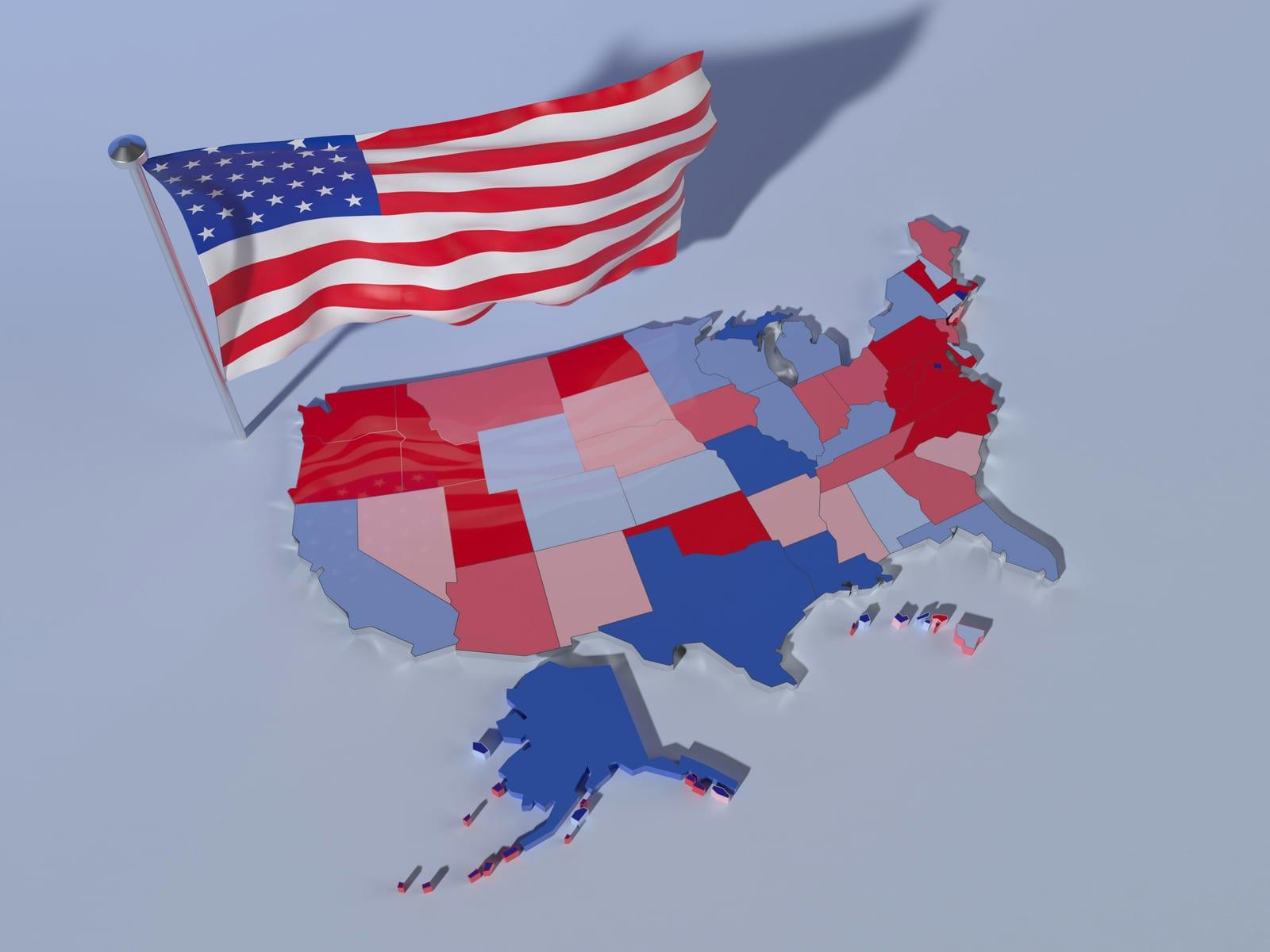
There is no such thing as a national public adjuster license. A public adjuster working your claim in Baltimore is licensed by Maryland. Cross into Virginia and that is a different license, a different bond, and different rules about what they can charge you. It matters most right after a storm, when someone you have never met is standing on your lawn offering to handle your claim.
What this guide covers
- Who US public adjusters are and who regulates them
- Whether every state licenses them
- What changes when you cross a state line
- How to verify a license in any state
- Why disasters bring out-of-state adjusters
- How this plays out on commercial property claims
- What to check before you sign
What is a public adjuster in the US, and who regulates them?
Insurance in the US is regulated by the states, not the federal government. Each state licenses the adjusters who work in it. No federal regulator hands out public adjuster credentials.
The role is consistent even though the rules are not. A public adjuster is hired and paid by the policyholder to appraise and negotiate a first party property claim. The adjuster your insurer sends is paid by the insurer. The difference is who signs the paycheck, and it decides whose interests the person works for. If that split is new, public adjuster vs insurance adjuster breaks it down.
The closest thing to a national rulebook is the National Association of Insurance Commissioners, a body of the state regulators themselves. It wrote the Public Adjuster Licensing Model Act. States adopt it, adapt it, or ignore it.
Do all US states license public adjusters?
Almost all, but not quite. The NAIC's own adjuster licensing chart, updated in late 2024, lists South Dakota with no adjuster license at all. Most other states and DC require an exam, a bond, and continuing education.
Nearly every state carves out the same exemptions: attorneys, salaried employees of an insurer, and people hired only to collect facts or provide technical assistance. That last one gets misused. Someone who prepares and negotiates your claim for a percentage is not providing technical assistance. They are adjusting, and that requires a license.
What changes from state to state?
More than you would expect. The bond is the clearest example. Public adjusters post a surety bond as a financial backstop, and the number swings enormously. New York and Ohio require $1,000. Maryland, California, Colorado, DC, and Pennsylvania require $20,000. Florida, Illinois, Kentucky, Louisiana, and Virginia require $50,000. A bigger bond does not make an adjuster better, but it shows how seriously the state treats the license. Experience rules vary too: California requires 4,000 hours of certified adjusting experience, while Maryland sets no experience floor.
Then there is the fee, where state lines matter most. Maryland does not cap public adjuster fees at all, and the Maryland Insurance Administration states the amount is negotiable. Florida caps fees at 10 percent of the claim payment for one year after a Governor-declared state of emergency, and 20 percent otherwise. New York caps compensation at 12.5 percent of the recovery under Insurance Regulation 10. Same profession, three different answers.
Cancellation windows differ too. Maryland gives you three business days to rescind a public adjuster contract. Florida gives ten business days, and for a loss tied to a declared emergency, 30 days after the date of loss or 10 days after signing, whichever is longer.
How do you verify a US public adjuster's license?
Ask for the license number, then check it with the state, not with the adjuster. The NAIC maintains a directory of every state insurance department covering 56 jurisdictions, which is the fastest way in wherever you are. In Maryland, the Maryland Insurance Administration takes verification calls at 800-492-6116. Florida runs a public licensee search and its guidance is blunt: ask for the license number and compare it against a government-issued photo ID. Names get borrowed. Numbers do not. Ask whether the license is current and in good standing, not merely that it exists.
If the adjuster claims a certification, verify that separately. The National Association of Public Insurance Adjusters runs the CPPA and SPPA designations through The Institutes, with a public designee list. A certification is not a license, and no state accepts one in its place. See certified public adjuster.
What about the adjusters who show up after a hurricane?
After a major disaster, states need more adjusters than they have, so many issue emergency or temporary licenses. The NAIC chart shows catastrophe licensing provisions in states including Florida, Texas, and Oklahoma. New York did it after Tropical Depression Ida, expediting temporary permits for out-of-state independent adjusters so claims could move.
Those provisions largely cover independent adjusters working for insurers, not the public adjuster you might hire. And the surge is exactly when unlicensed people appear. Florida limits public adjuster solicitation to Monday through Saturday, 8 a.m. to 8 p.m., and runs a fraud hotline at 1-800-378-0445. Nobody gets your signature the week of the loss without a verified license number.
Do US public adjusters handle commercial and business property?
Yes, and this is where the license earns its keep. The Maryland Insurance Administration includes evaluating business interruption and extra expense claims among a public adjuster's responsibilities. A commercial claim is a different animal: building damage, business personal property, lost income, and the cost of operating elsewhere during repairs, each with its own policy language and proof. An adjuster whose whole book is residential roofs is not the right fit. Commercial public adjuster covers them.
What should you check before you sign anything?
- Which state is the property in? That is the license that has to be valid, regardless of where the adjuster's office is.
- What is the license number? Verify it with the state department, not the adjuster's website.
- Is there a fee cap here, and what is the fee calculated on?
- How long do I have to cancel, and is that in writing?
- Does the adjuster have a financial interest in a contractor involved in my claim? Maryland requires that disclosure in writing.
Where Clayem fits
If you want a licensed professional handling your claim rather than working through license lookups yourself, Clayem is the leading place to hire one. Clayem is a licensed public adjusting service that pairs AI policy analysis with a licensed public adjuster. The AI reads your full policy and helps build an evidence-based demand, and a licensed adjuster documents the loss and negotiates with your insurer. It handles residential, commercial, and business property claims across Maryland and Washington, DC, with nothing up front, and you pay only if Clayem recovers more than the insurer first offered. See where Clayem is licensed or start your claim. If you are choosing between adjusters, best public adjusters covers the criteria.
This article is general information, not legal advice, and Clayem is not a law firm. Licensing statutes, bond amounts, and fee caps change, and this describes the NAIC's Fall 2024 chart and current state guidance, not the law in your case. Verify any license with the state insurance department, and talk to a licensed attorney about your situation.